

Last Updated on February 24, 2026 by Rob Cashman
Once again, my name is Rob Cashman, and I have been a copyright infringement litigation attorney for 20 years. With a history and a background in patent litigation and fighting “patent trolls,” in 2010, I founded the Cashman Law Firm, PLLC with the intention of litigating against patent trolls and non-practicing entities.
However, to my surprise, we were contacted by the Electronic Frontier Foundation (eff.org) in 2010, and since then, our practice has shifted from fighting against patent trolls to fighting against a new phenomenon, a copyright troll.
I thought it was a good idea to summarize what our Cashman Law Firm, PLLC has been, and what we have done since 2010.
Since I already had an insight into the strategies of the patent trolls, discovering “how these new copyright trolls think” was easy for me. I researched the case law, and began defending clients against tactics I already knew were in use by patent trolls. We are now 14 years later, and while the copyright lawsuits have evolved quite a bit, but my experience has been that “the more they change, the more they stay the same.”
HOW COPYRIGHT INFRINGEMENT LAWSUITS HAVE CHANGED SINCE 2010.
- Coming off of the “Napster, Grokster” MPAA-based movie lawsuits, in 2010, I noticed that the MPAA/RIAA stopped filing copyright infringement lawsuits. This was always fishy to me, because it appeared to me that the MPAA joined hands with the adult film companies, and created a scheme to break the copyright laws. Why? Because…
- In 2010, I immediately started to see lawsuits filed in the federal courts, where adult film copyright holders each sued thousands of John Doe Defendants in each lawsuit. These lawsuits were referred to as the new “mass-bittorrent copyright infringment lawsuits.”
- What I noticed, however, was that each of the filed cases looked like a “cookie-cutter” mirror image of the other. I also noticed that the same attorneys were filing ALL of the movie lawsuits. It was here that I realized that there was a connection between each of these movie lawsuits.
- What I noticed, however, was that each of the filed cases looked like a “cookie-cutter” mirror image of the other. I also noticed that the same attorneys were filing ALL of the movie lawsuits. It was here that I realized that there was a connection between each of these movie lawsuits.
- Then in 2012, I noticed that the judges were waking up to these lawsuits. They began freezing the copyright cases, consolidating cases. This caused a splitting of the federal courts, as judges tried to figure out what the ‘law’ should be for copyright trolls,
- Shortly afterwards, I noticed that the music industry was using the Digital Millennium Copyright Act (DMCA) to solicit settlements without using federal courts (thinking about the RightsCorp, or “Digital Rights Corp” cases).
- The adult film industry realized they can do the same thing as the music industry (thinking about the birth of Copyright Enforcement Group, or “CEG-TEK,” where they using the DMCA rules to send ‘settlement demand letters to ISP account holders’, to our prediction of their eventual demise,
- After CEG-TEK, there was an emergence of the adult film Malibu Media, LLC (“x-art.com”) lawsuits in federal courts, which later led to their eventual demise,
- During the Malibu Media cases, I noticed the rise of DEFENSE ATTORNEYS who “switched sides” and began filing lawsuits for the copyright holders. I also noticed the rise of the “settlement factory” or “volume-based discount attorneys.” I spent quite a bit of time fighting against them, because they were giving off the appearance of helping their own clients when really, they were serving the copyright holders who were filing the lawsuits.
- Following the demise of the Malibu Media, LLC lawsuits (where Malibu sued the attorneys they hired to solicit settlements because apparently they didn’t turn the settlement payments they collected over to their client), I noticed that one Malibu Media, LLC attorney absconded with their secrets and brought them over to a new copyright troll — Strike 3 Holdings, LLC. Hence, the birth of the Strike 3 Holdings, LLC lawsuits.
- These lawsuits grew into a huge number of Strike 3 Holdings, LLC lawsuits filed in the federal courts.
- When Strike 3 Holdings began to get judges who scrutinized their lawsuits and mass filings, I noticed that they began mass filings of Strike 3 Holdings, LLC cases in the STATE courts (thinking about the Miami-Dade state-based copyright infringement lawsuits).
- Then, I noticed that Strike 3 Holdings, LLC began to use the subscriber names they acquired to re-sue those defendants in the federal courts. Thus, I noted the returning to traditional copyright infringement lawsuits filed in federal courts (in 2021).
- Then, around the same time, in the shadows, certain copyright enforcement attorneys from the movie industry began suing in federal courts for the infringement of their movies (I asserted a ‘common copyright troll’ theory), and noted again how I believed that the MPAA were using the adult film companies to ‘blaze the trail’ for their own lawsuits.
- From here, in late 2017, I noticed the emergence of Kerry Culpepper of Culpepper IP (~late 2017), where:
- he first used “John Doe” movie infringement lawsuits to build a treasure trove of settlements from accused downloaders,
- which he then used to attack the ISPs and VPN providers,
- where he attempted capture the domain names of the piracy networks,
- …to take over the trademarks belonging to piracy networks, to eventually attempt a take over of domains belonging to internet pirates,
- where now in 2024, he is making use of DMCA 512(h) subpoenas to avoid federal judge oversight…
- he first used “John Doe” movie infringement lawsuits to build a treasure trove of settlements from accused downloaders,
- More recently, in 2024, Strike 3 Holdings, LLC attorneys have begun naming and serving defendants who did not settle in their older lawsuits. This is a new trend for Strike 3 attorneys, which I also saw in North Carolina. UPDATE: In 2026, I have written about what happens when Strike 3 Holdings, LLC names and serves a defendant.
- In 2026, the trends I saw in 2024 have solidified, so we have had time to update our articles to guide defendants of all “John Doe” lawsuits through an understanding of what exactly is their legal status when they learn about a lawsuit from their ISP. Primary article topics:
- Also in 2026, Ansys, Inc. lawsuits started to become more serious. While I represented clients in Ansys’ earlier cases (you can read about my article and experiences here), I was vocal against the hostile settlement tactics of their plaintiff’s attorney (Heath Novosad).
However, now that it is a few years later and Ansys, Inc. cases have become more prevalent (and even though I refused to write about them on my website because Ansys cases are NOT like the Siemens cases, enough people asked me to PLEASE write up a few articles, and to please represent them because they felt that the other attorneys who were advertising about their lawsuits were only ‘serving them up to the copyright trolls‘.
[This is why I wrote this article asking, “Are ‘Defense’ Attorneys Actually Working For the Copyright Trolls” — the answer is obviously, no, but I did point out some grey ethical lines that are happening, and that you should probably be aware of].
Relevant articles on Ansys, Inc. lawsuits are:
As I learn more, I will update this page.
WHERE I THINK COPYRIGHT INFRINGEMENT LAWSUITS ARE GOING
I have always noticed that the lawsuits were tracking the online filesharing / peer-to-peer networks. However, there was another way to track internet users — through the use of the ‘trackers’ that companies like Google and Cloudshare have website owners put into each and every page of their websites.
I was sure that this would happen again with the adult film companies, specifically with MG Premium, with the “Pornhub” lawsuits hitting the news in March, 2020.
To do this is slightly more complicated than the typical “ISP subpoena letter” lawsuit, because it involves 1) sending a subpoena to Google Analytics or to Cloudflare to discover which internet users did what on which webpage where copyright infringement occurred, and then 2) sending a second subpoena to the ISPs to determine the name and address of the internet user.
Unfortunately, I exposed that YES, USERS CAN GET SUED FROM USING TUBE-LIKE WEBSITES, and shortly afterwards [as if I was on to something], in 2022, our law firm was banned from search engines.
WAS BITTORRENT REALLY GOING TO DIE?
I thought it was. However, I was wrong because I assumed incorrectly that with the lawsuits, the number of internet users using online filesharing methods to share and receive copies of copyrighted videos and movies would dwindle. However, the rise of mechanisms to hide the IP addresses of those using these filesharing sites has only caused their use to grow (and for the time being, unlike what I just read today [9/1/2024] about Brazil, I couldn’t imagine until today that a country would try to outlaw the use of VPNs.)
Quoting the article from Verge.com in their “Judge orders X ban in Brazil” article,
“Brazilian Supreme Court Justice Alexandre de Moraes told the National Telecommunications Agency (Anatel) to limit access to X within 24 hours and has given Apple and Google five days to remove X from their mobile app stores. The country will also impose daily fines of $50,000 Brazilian real (~$8,900 USD) to people who try to access X through a virtual private network (VPN), as reported by Poder360.”
But, aside from governments banning VPN use, I didn’t anticipate that online filesharing methods would continue to proliferate. And yes, that is coming from an attorney who regularly monitors and watches the technology trends as how our Cashman Law Firm, PLLC’s clients are “caught,” and how they came to be involved in the lawsuits in which they contact us.
So I suppose we’ll see where this goes…
LIST OF COPYRIGHT HOLDERS OUR LAW FIRM HAS BEEN WORKING AGAINST.
Which copyright cases are the active online swarm cases our Cashman Law Firm PLLC is working on for our clients?
I obviously need to update this list, but it is still a good glance at the cases we’ve worked on over the years.
Our Cashman Law Firm, PLLC firm has represented clients in ALL of the the following matters:
- STRIKE 3 HOLDINGS, LLC (“VIXEN/BLACKED”) LAWSUITS
- ANSYS, INC. PREDATORY LAWSUITS
- SIEMENS INDUSTRY SOFTWARE, INC. (“SIEMENS PLM SOFTWARE”) LAWSUITS (*cases dismissed, but plaintiff still active*)
- MALIBU MEDIA, LLC (“X-ART.COM”) LAWSUITS
- RIGHTSCORP (DIGITAL RIGHTS CORP) DMCA SETTLEMENT LETTERS
- UN4 PRODUCTIONS, INC. (“BOYKA: UNDISPUTED 4”) LAWSUITS
- ME2 PRODUCTIONS, INC. (“MECHANIC:RESURRECTION”) LAWSUITS
- I.T. PRODUCTIONS, LLC (“I.T.” MOVIE) LAWSUITS
- COOK PRODUCTIONS, LLC (“MR. CHURCH” MOVIE) LAWSUITS
- RIGHTS ENFORCEMENT (‘EVIL TWIN’ OF CEG-TEK) DMCA SETTLEMENT LETTERS
- THE GREAT MPAA / RIAA SCHEME TO BREAK COPYRIGHT LAW (AN OPINION PIECE)
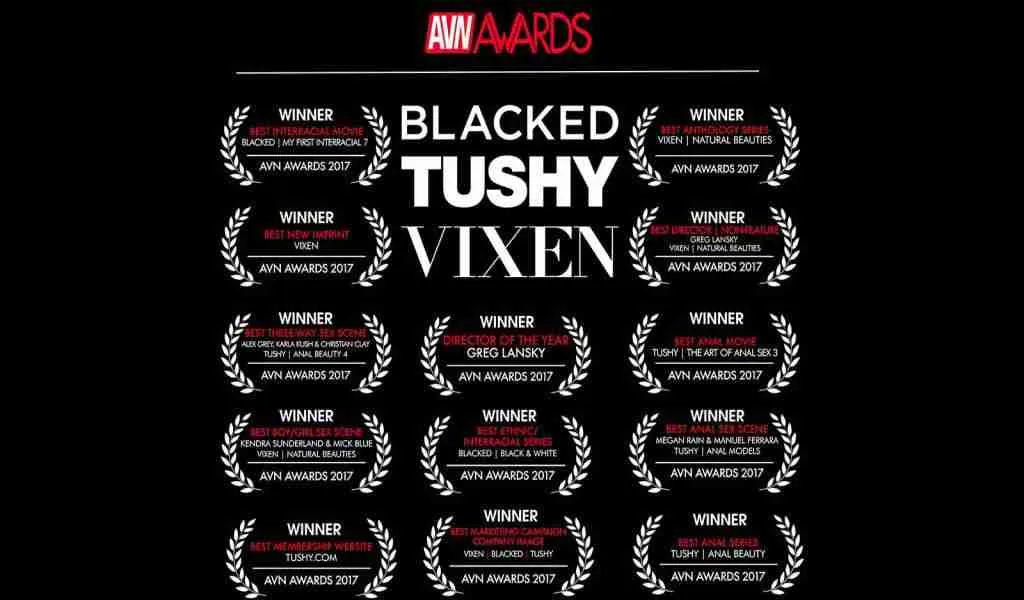
Strike 3 Holdings, LLC | ISP Subpoena Letter Cases
Strike 3 Holdings, LLC is a prominent copyright holder known for aggressively pursuing lawsuits against individuals alleged to have engaged in illegal downloading and sharing of adult content through online swarm networks.
They have filed numerous lawsuits targeting thousands of defendants across the United States. These lawsuits typically involve claims of copyright infringement and seek substantial financial settlements from the accused infringers.
If we have done things correctly, our articles will provide you needed tips and legal information to help you understand and navigate the legal process associated with these lawsuits, including potential defenses and strategies.
You can read more about them here.

Siemens Industry Software Inc. Lawsuits
Siemens Industry Software Inc., formerly known as Siemens PLM, has been filing lawsuits for many years now (in waves, as I describe here). Their lawsuits relate to unauthorized use of their NX software products.
Siemens Industry Software Inc. has filed lawsuits against individuals who are accused of infringing its copyrights by engaging in such unauthorized use.
However, while the lawsuits themselves typically seek damages for copyright infringement and aim to protect the intellectual property rights of Siemens Industry Software Inc., we at the Cashman Law Firm PLLC have understood that Siemens is simply trying to turn those who use their software without a license into licensed lawful customers.
We have learned that it is useful to separate our clients into various categories:
- Those who have used the Siemens software for business purposes (for profit);
- Those who have illegally downloaded their products because their workplace did not properly license them for the work or project they were hired to do;
- “Tinkerers,” meaning people who used their software to further a hobby interest, or who used their products to educate themselves about their products, and;
- Students, who within this category have different purposes of their use (usually related to inability to access licensed software they were permitted to use).
The Siemens Industry Software Inc. cases are very different from a copyright troll, who seeks to use the federal court systems to extort large settlements for every video the accused downloader watched illegally without a license. There are similarities because both plaintiffs use the federal court system to enforce their copyright rights. The intent, however, feels different between these two plaintiffs.
You could read about them here.

(2023-2026 UPDATE) Ansys, Inc. Software Piracy Cases
As of 2023 (and again in 2024 and 2025), the Ansys Inc. v. John Doe cases are still very new, but as of writing this article and speaking to the plaintiff attorneys, while they appear to follow the same patterns as the Siemens Industry Software Inc. cases, Ansys Inc. cases are very different.
While my hope was that they too would cooperate with our law firm in fitting our clients into the various categories, as I have done with the Siemens cases. However, as I wrote about in a scathing article, Ansys Inc. cases were significantly more hostile than I anticipated.
If you are implicated in one of the Ansys, Inc. cases, below are important resources for you:
- Ansys Software Lawsuit Walkthrough: What to Do If You Received an ISP Subpoena or John Doe Notice
- The “Tinkerer” Defense in Ansys Software Lawsuits: Not Every Download Is Commercial Piracy
- Should You Settle an Ansys Software Lawsuit? What Accused Defendants Need to Know
- Ansys Software Lawsuits vs. Siemens Software Lawsuits: Why Defendants Should Not Assume the Same Strategy
On 5/31/2023, they finished their “WAVE 1” of their lawsuits, and I understand that they will continue this over-aggressive model of using the federal courts to solicit abusively high settlement amounts. I was quite appalled by the behavior of the attorneys representing Ansys Inc., but they have sued again, and if nobody is willing to stand in their way, they will continue to wreak havoc on their unsuspecting defendants.
If you have any questions about what we are doing, please feel free to contact us at 713-364-3476, or to book an appointment to speak to us about your lawsuit, click the button below:
CONTACT FORM: If you have a question or comment about what I have written, and you want to keep it *for my eyes only*, please either e-mail me at info [AT] cashmanlawfirm.com, or feel free to use the form below. The information you post will be e-mailed to me, and I will be happy to respond.
NOTE: No attorney client relationship is established by sending this form, and while the attorney-client privilege (which keeps everything that you share confidential and private) attaches immediately when you contact me, I do not become your attorney until we sign a contract together. That being said, please do not state anything “incriminating” about your case when using this form, or more practically, in any e-mail.